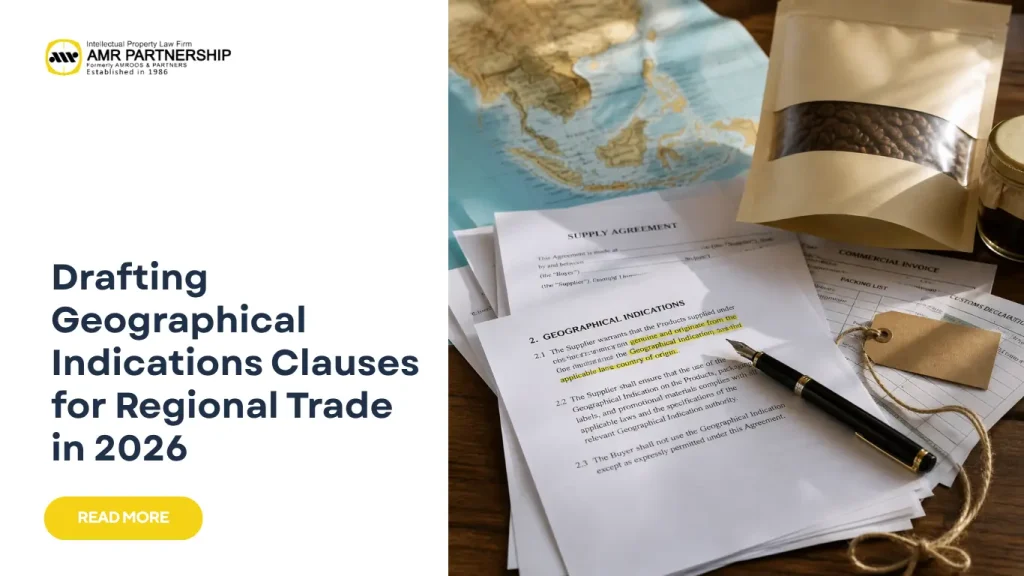
Geographical indications (GI) are no longer a niche legal issue. In 2026, they have become a real commercial consideration for businesses involved in food, beverages, agriculture, specialty products, and international trade. If your company imports, distributes, licenses, or markets products linked to a specific place of origin, Drafting Geographical Indications Clauses should be part of your contract strategy.
Common examples include protected names used for sparkling beverages, specialty teas, premium cheeses, regional coffees, and agricultural products associated with a specific location. These names carry commercial value because they are tied to reputation, quality, and origin. Misusing them in commercial agreements can lead to:
- disputes between commercial parties
- customs delays or border issues
- reputational damage
- infringement claims
For companies using Singapore as a base for cross-border trade, clear contractual protection matters more than ever.
Why GI Clauses Matter in Commercial Agreements
Many businesses focus heavily on trademarks but overlook geographical indications. That can create unnecessary risk, particularly where products move across multiple markets or rely on origin-based branding.
Common situations include a distributor promoting products using protected origin terms without approval, a supplier making authenticity claims without sufficient legal basis, or an online seller relabelling imported goods in a misleading way.
This is where properly drafted GI clauses become valuable. Drafting Geographical Indications Clauses helps define:
- who may use protected names
- under what conditions they may be used
- what standards must be maintained
- what remedies apply if obligations are breached
For growing businesses, that clarity often prevents costly issues later.
Key Clauses Businesses Should Consider in 2026
Every agreement is different, but several provisions are commonly worth considering when contracts involve GI-related products. When Drafting Geographical Indications Clauses, businesses should pay close attention to the following areas.
Permitted Use of Protected Names
Specify whether a party may use a protected geographical name in packaging, advertising, online listings, or resale materials. If use is allowed, the scope should be clearly limited.
Source and Authenticity Warranties
Suppliers should confirm that products genuinely originate from the claimed region and meet relevant quality or regulatory standards.
Labeling and Marketing Compliance
Set clear rules for:
- translations
- repackaging
- promotional claims
- marketplace listings in different jurisdictions
This helps reduce the risk of misleading consumers or breaching local regulations.
Territory Restrictions
Clarify where products may be sold, whether re-export is permitted, and whether exclusivity applies in certain markets.
Indemnity and Liability
Allocate responsibility if third-party claims arise from:
- misuse of protected names
- false designation of origin
- non-compliant labeling
Termination Rights
Allow immediate action if misuse of origin-based branding harms the business or creates legal exposure.
Why Singapore and Regional Businesses Need This Now
Singapore remains a major gateway for imports, exports, and regional distribution. Many companies use Singapore entities to manage operations across several markets, which means one weak agreement can create exposure beyond a single country.
A clause drafted for one jurisdiction may not be enough when products move through multiple territories. Businesses need agreements that reflect commercial realities, not generic templates copied from unrelated transactions. This is why Drafting Geographical Indications Clauses has become more relevant in 2026.
Common Mistakes We Still See
Some of the most common issues include:
- using trademark clauses as a substitute for GI protection
- assuming supplier invoices are enough proof of authenticity
- allowing distributors to create their own marketing claims
- ignoring local labeling requirements
- leaving disputes to be handled after launch
These shortcuts often become more expensive than getting the contract right at the start.
How AMR Supports Regional Businesses
AMR Partnership advises businesses on intellectual property, commercial contracts, and cross-border brand protection. For companies dealing with products linked to protected origins, carefully tailored agreements can help reduce disputes and preserve long-term commercial value.
Whether you are appointing a distributor, reviewing supplier terms, licensing branded goods, or expanding into new markets, well-drafted GI clauses can provide an important layer of protection.
In 2026, geographical indications are not only about legal rights. They are also about:
- market trust
- pricing power
- commercial control
For more information about AMR Partnership, feel free to contact us:
- Phone (Hunting): +62-21-29036668
- Fax: +62-21-29036672 to 75
- WhatsApp Customer Service: Click here to chat
- Instagram: @amrpartnership
- TikTok: @amr.partnership
- Facebook: Law Firm AMR Partnership
- Official Website: www.amr.co.id