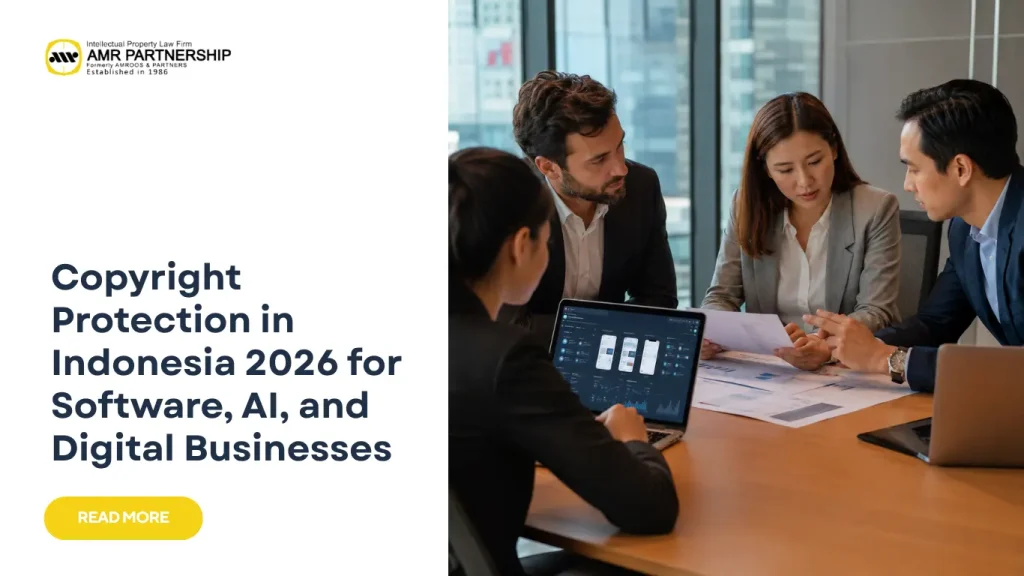
Planning to launch software, digital content, or AI-powered products in Indonesia? Copyright protection generally arises automatically, but ownership disputes, licensing issues, and infringement risks can still create significant business challenges. With Indonesia preparing major copyright reforms in 2026, reviewing your copyright strategy early can help protect valuable intellectual assets and support growth across Southeast Asia.
Why Copyright Protection Is a Business Issue, Not Just a Legal Issue
Indonesia is home to Southeast Asia’s largest digital economy and one of the region’s most attractive markets for technology companies, digital platforms, content businesses, and foreign investors. According to Indonesia’s Ministry of Communication and Digital Affairs, the country has more than 220 million internet users, creating significant opportunities for businesses that rely on software, digital content, and online services.
For many companies, intellectual property is among their most valuable assets. Source code, mobile applications, websites, databases, digital content, training materials, and marketing assets may all be protected under Indonesian copyright law.
The real challenge is often not whether copyright exists, but whether ownership can be proven and enforced when business interests are at stake.
Automatic Protection Does Not Eliminate Risk
Indonesia follows the Berne Convention, which means copyright protection generally arises automatically once an original work is created and fixed in a tangible form.
Many businesses mistakenly assume that automatic protection removes the need for planning. In practice, disputes frequently arise over ownership, licensing rights, commercial use, and unauthorized copying.
For companies operating across multiple Southeast Asian markets, clear documentation and ownership structures are often just as important as the copyright itself.
The Ownership Mistake That Can Cost Businesses Later
One of the most common misconceptions is that a company automatically owns everything created by employees, developers, agencies, or freelancers.
Ownership may depend on employment relationships, work-for-hire arrangements, service agreements, and intellectual property assignment clauses.
This issue commonly affects:
- Software and application development
- Website creation projects
- AI-assisted products
- Digital content production
- Marketing and creative campaigns
Problems often surface during investment rounds, licensing negotiations, mergers and acquisitions, or copyright disputes—precisely when ownership clarity becomes most valuable.
Copyright Protection for Software, AI, and Digital Platforms
For technology businesses, copyright protection extends far beyond books, music, or artistic works.
Commercially important assets that may qualify for protection include:
- Software and source code
- Mobile applications
- Website content
- Databases
- Digital media assets
- Training materials
- Creative and marketing content
Businesses using artificial intelligence should also pay attention to upcoming regulatory developments. Indonesia is currently discussing copyright reforms that may introduce clearer rules for AI-assisted works, AI-generated content, digital assets, blockchain-related content, and online platform responsibilities.
For software companies, SaaS providers, VPN services, AI developers, and digital platforms, these developments could influence future ownership, licensing, and compliance strategies.
Why Early Copyright Planning Delivers Better Business Outcomes
Many businesses only seek legal support after discovering infringement or ownership problems. By that stage, resolving the issue is often more costly and disruptive.
A proactive copyright strategy can help businesses:
- Reduce legal uncertainty
- Strengthen investor due diligence
- Support licensing and commercialization opportunities
- Improve acquisition readiness
- Protect long-term revenue streams
- Strengthen enforcement efforts
For growing technology companies, copyright strategy should be treated as a business asset that supports growth, protects innovation, and strengthens competitive advantage—not merely as a legal formality.
How AMR Partnership Can Help
For local and international businesses operating in Indonesia, effective copyright protection involves more than simply relying on automatic legal protection.
AMR Partnership assists businesses with copyright ownership structuring, copyright recordation, software and technology-related intellectual property matters, licensing arrangements, enforcement strategies, and broader intellectual property protection.
Whether you are expanding into Indonesia, developing software products, commercializing digital content, or preparing for investment, obtaining legal guidance early can help reduce risk and protect valuable business assets. Moreover, a proactive copyright strategy can strengthen ownership structures, support future growth, and help prevent costly disputes before they arise.
FAQ
Is software protected by copyright in Indonesia?
Yes. Computer programs and software are recognized as copyrightable works under Indonesian law and may receive protection once created.
Can foreign companies own copyright in Indonesia?
Yes. Foreign businesses can benefit from copyright protection in Indonesia through national law and international copyright agreements, including the Berne Convention.
Will AI-generated content be protected in Indonesia?
Indonesia is currently discussing copyright reforms that may introduce specific provisions for AI-assisted and AI-generated works, making this an important area for businesses to monitor in 2026.
- Phone (Hunting): +62-21-29036668
- Fax: +62-21-29036672 to 75
- WhatsApp Customer Service: Click here to chat
- Instagram: @amrpartnership
- TikTok: @amr.partnership
- Facebook: Law Firm AMR Partnership
- Official Website: www.amr.co.id