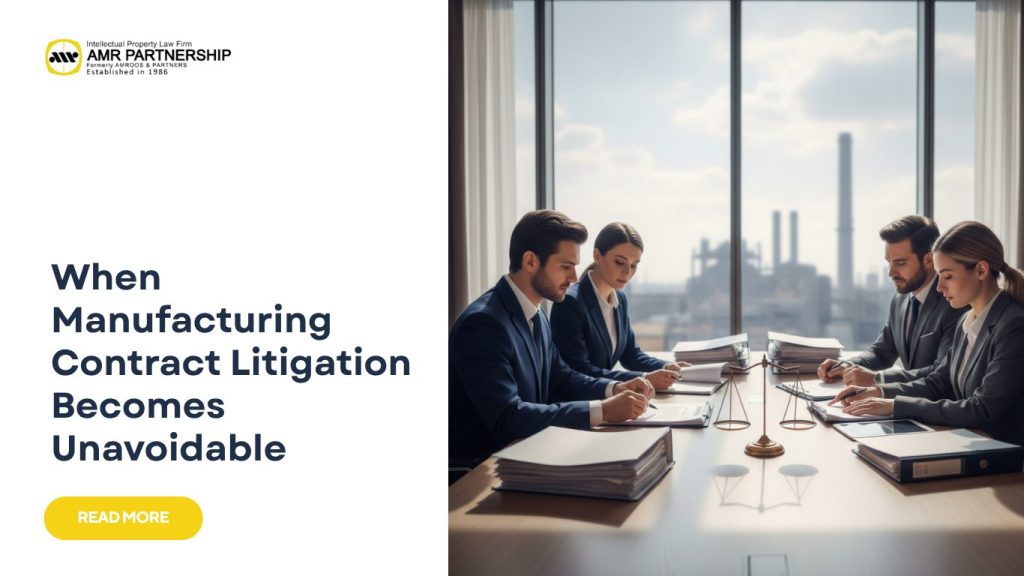
Every business relationship begins with optimism, shared goals, and mutual trust. But in the real world, even the most carefully drafted contracts can face unexpected challenges. When production delays, poor-quality goods, or unfulfilled commitments occur, companies often find themselves caught in a complex and costly process known as manufacturing contract litigation.
For many companies in Indonesia and beyond, this form of litigation has become increasingly relevant as manufacturing partnerships expand across regions and supply chains. At AMR.CO.ID, businesses can find strategic legal support designed to handle such disputes efficiently and professionally.
READ MORE: The Role of a Patent Firm Indonesia in Handling Intellectual Property Disputes and Litigation
Business Partnerships Don’t Always Go as Planned
In business, good intentions alone are never enough. Two parties might begin a contract with clear deliverables and deadlines, but once execution starts, problems can arise — missed shipments, non-compliance with specifications, or even total breakdowns in communication. When those issues go unresolved, litigation becomes the last resort.
A recent example from Indonesia illustrates how a seemingly straightforward commercial agreement can escalate. Two companies entered into a production-related contract involving large-scale supply obligations. When one failed to deliver within the agreed time frame, the other demanded compensation. Despite prior commitments and written guarantees, the payment was never made, leading to a court case for breach of contract.
While this case was not strictly a manufacturing dispute, it reflects the same underlying problem — the failure to fulfill obligations within a commercial partnership. If a manufacturing company faces similar issues, the consequences can disrupt entire supply chains and damage long-term business trust.
READ MORE: IP Law Firm Services in Jakarta: A Guide to Litigation and Dispute Resolution
Understanding Manufacturing Contract Litigation
Manufacturing contract litigation occurs when one or more parties fail to honor a production or supply agreement. This could involve anything from late deliveries and defective products to disputes over raw materials or quantities. Essentially, it’s what happens when a business agreement breaks down and legal intervention becomes necessary.
These disputes can arise in various manufacturing contexts:
- A supplier fails to meet production targets.
- Products do not meet quality standards or technical specifications.
- Delays in delivery cause financial losses for buyers.
- One party terminates the contract unfairly or without notice.
When such problems occur, the affected party can pursue legal action to recover losses, enforce specific performance, or terminate the agreement altogether. In Indonesia, the legal framework for these disputes typically falls under the Civil Code, with claims often categorized as wanprestasi (breach of contract).
This type of litigation isn’t limited to large corporations. Small and medium enterprises are equally vulnerable, especially when they lack proper legal documentation or oversight during contract formation. The costs of ignoring such issues can be substantial — not only financially but also reputationally.
READ MORE: The Importance of Law Firms in Resolving Cases Through IP Litigation Law Firm
Why These Disputes Happen More Often Than You Think
In practice, most contract disputes aren’t the result of intentional wrongdoing. They’re caused by miscommunication, unrealistic expectations, or inadequate documentation. In manufacturing, where precision and timing are everything, even small errors can trigger big problems.
Common causes include:
- Unclear technical specifications occur when standards are not properly defined, causing parties to interpret “acceptable quality” differently.
- Rising raw material prices happen when cost fluctuations burden suppliers and lead to failure in meeting contractual obligations.
- Weak quality control arises when inspections or testing are not conducted thoroughly, resulting in defective products.
- Payment disputes occur when disagreements arise over pricing, invoices, or imposed penalties.
- Sudden contract termination happens when one party decides to cancel an order without prior notice.
These issues can be minimized with stronger contracts, regular communication, and proactive legal review. However, many businesses only realize this after the damage has been done.
When a supply chain is disrupted or deadlines are missed, the ripple effects can extend far beyond the immediate parties — impacting clients, investors, and brand reputation. That’s why understanding the potential risks and having a prevention plan is essential before signing any manufacturing contract.
READ MORE: How to Handle International Trademark Conflict Resolution Smartly?
From Disagreement to Litigation
When business negotiations reach a dead end, litigation becomes the next step. In Indonesia, disputes over manufacturing contracts typically proceed through the District Court as civil cases for breach of contract. The process includes filing the claim, submitting written evidence, witness examination, and ultimately, enforcement of the court’s decision.
While the legal system provides remedies, the litigation process can be time-consuming and resource-intensive. Court cases often last several months or even years, depending on complexity. This delay can further impact business continuity, particularly for companies that rely heavily on time-sensitive manufacturing agreements.
To avoid such complications, legal experts often advise clients to seek professional counsel early — ideally before the dispute escalates. A well-drafted contract that includes clear dispute resolution mechanisms, performance clauses, and penalties for delay can significantly reduce litigation risk.
Many companies underestimate how quickly a production issue can turn into a full-scale legal battle. Once communication stops and deadlines are missed, parties often resort to lawyers, and litigation becomes inevitable. By then, it’s not just about recovering losses — it’s about protecting corporate credibility and maintaining long-term partnerships.
READ MORE: Brand Protection Services: Why Your Business Needs It Now
Preventing Litigation Before It Starts
Prevention is always better than cure — especially in the world of contract law. To minimize your exposure to litigation, every stage of your manufacturing process should be supported by solid documentation and professional oversight.
Here are a few preventive measures that can make all the difference:
- Define deliverables in detail. Avoid vague terms like “good quality.” Specify standards, materials, testing methods, and timelines.
- Include dispute resolution clauses. Outline how disagreements will be resolved — through mediation, arbitration, or court proceedings.
- Review payment terms carefully. Ensure all milestones, deposits, and penalty terms are clearly stated.
- Maintain thorough documentation. Keep detailed records of every communication, change request, and approval during production.
- Conduct regular legal reviews. Periodic audits by legal professionals can identify risks before they turn into disputes.
While these steps may sound simple, they form the backbone of a resilient contract. Many high-value manufacturing disputes stem from missing or poorly written clauses. A strong contract doesn’t just protect your interests — it builds trust and clarity between partners.
READ MORE: Design Patents in Fashion: How Style Meets Legal Protection
When Litigation Becomes Inevitable
Even with the best precautions, some disputes are unavoidable. When a manufacturing contract collapses, quick and strategic action is crucial. Start by collecting all relevant evidence such as the signed contract, correspondence (letters or emails), invoices, and performance reports. These documents become the foundation of your case.
Engaging a professional litigation team early can make a decisive difference. An experienced lawyer will help you:
- Evaluate your legal position objectively.
- Identify the most effective legal remedies.
- Develop a strategy that protects both financial and reputational interests.
Manufacturing disputes often involve technical details — from machinery failures to production metrics. Having legal counsel who understands both the business and technical aspects ensures the litigation process stays focused, fair, and efficient.
A tailored litigation approach helps your business avoid unnecessary losses and focus on recovery. Legal services for commercial and manufacturing disputes are available starting from a consultative package, depending on case complexity. To receive a detailed estimate, clients are encouraged to reach out directly via WhatsApp or Instagram.
READ MORE: How Competition Litigation Shapes the Fight Against Predatory Pricing
Final Reflection
Every contract represents mutual trust and business growth potential. Yet when obligations aren’t met, manufacturing contract litigation becomes a necessary path to restore balance and accountability. While it may seem daunting, proper legal representation can turn a challenging situation into a controlled, strategic process that safeguards your interests.
Rather than fearing litigation, businesses should approach it with clarity and preparation. Professional legal guidance ensures that even in conflict, your company’s rights remain protected, and your operations continue smoothly.
If your company is currently facing or anticipating a manufacturing or commercial dispute, don’t wait until it’s too late. Consult with our legal team today through AMR.CO.ID. Get expert support to navigate complex manufacturing contract litigation efficiently — your business deserves the best legal protection possible.
- Phone (Hunting): +62-21-29036668
- Fax: +62-21-29036672 to 75
- WhatsApp Customer Service: Click here to chat
- Instagram: @amrpartnership
- TikTok: @amr.partnership
- Facebook: Law Firm AMR Partnership
- Official Website: www.amr.co.id