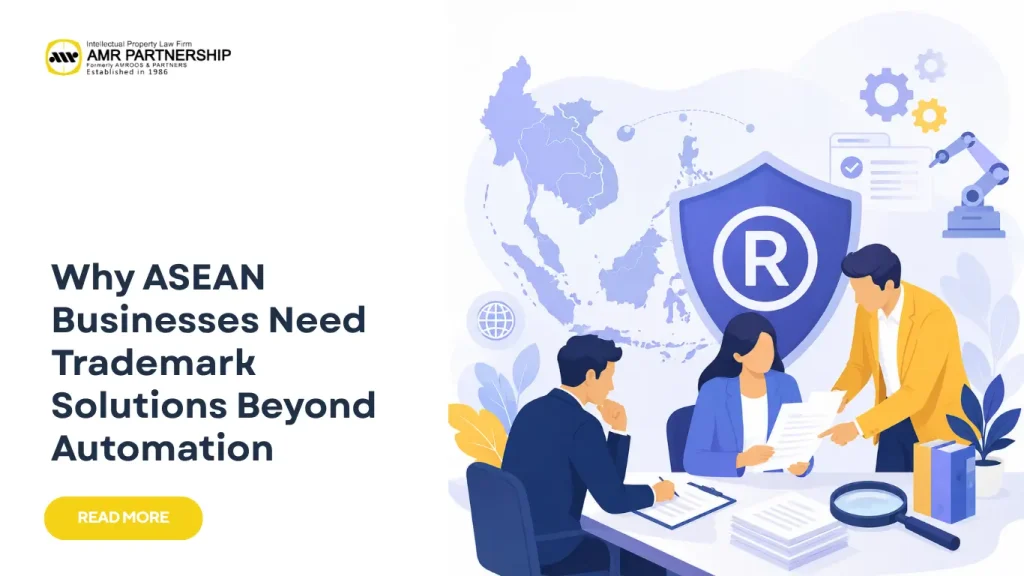
Many businesses assume trademark solutions are simply about faster tools and automation. In reality, efficiency alone does not eliminate legal risk—especially for businesses expanding across Southeast Asia.
If your business is entering markets like Singapore, Malaysia, Thailand, Vietnam, or the Philippines, trademark challenges often go far beyond registration. Availability conflicts, cross-border filing complications, infringement issues, and disputes can delay expansion and increase operational costs. That’s why businesses are taking a more strategic approach to trademark protection in 2026.
Trademark Disputes Are Becoming a Costlier Business Risk
A 2026 industry report based on an independent survey of more than 230 in-house and law firm trademark professionals found that 64% now dedicate most of their resources to enforcement and dispute management, overtaking trademark clearance and search as the primary focus.
What does that mean in business terms? Filing a trademark is no longer the hardest part. Protecting it is.
Trademark disputes are not just legal headaches. They can disrupt product launches, delay expansion, trigger costly rebranding, and create uncertainty that slows business momentum.
For growth-focused businesses, this goes beyond compliance. It is about protecting revenue, timelines, and market opportunities.
Why Technology Alone Is Not a Complete Trademark Solution
The same research found that 78% of trademark professionals prefer a balance between automation and expert human oversight, while only 2% rely on fully automated trademark management.
The message is clear: efficiency matters, but so does judgment.
Technology can help streamline searches and improve workflows. But when trademark conflicts involve market expansion, oppositions, infringement claims, or jurisdiction-specific issues, strategic legal guidance becomes far more valuable than automation alone.
For businesses, the right trademark solutions should reduce commercial risk—not simply automate administrative tasks.
Why Trademark Strategy Matters More in Southeast Asia
Trademark protection does not automatically extend across borders.
A registration in one country does not secure protection across Southeast Asia. Each jurisdiction has different filing procedures, legal interpretations, timelines, and enforcement mechanisms.
A business expanding regionally may face challenges such as:
- trademark availability conflicts in target markets
- differing classification requirements across jurisdictions
- opposition from existing rights holders
- inconsistent enforcement frameworks
Without a coordinated strategy, businesses may face launch delays, duplicated legal costs, or even forced rebranding.
This helps explain why 15% of surveyed trademark professionals plan to increase investment in trademark tools and services, up from 10% the previous year.
The shift is clear: trademarks are increasingly treated as business assets that require active management, not one-time legal paperwork.
What Businesses Should Expect From Effective Trademark Solutions
Strong trademark solutions should go beyond basic filing support.
For businesses expanding across multiple markets, that often includes:
- trademark availability assessments before launch
- jurisdiction-specific filing strategy
- portfolio management for growing brand assets
- enforcement support against infringement
- opposition and dispute handling
- regional trademark strategy aligned with expansion goals
The objective is not simply obtaining trademark registration. The objective is reducing business risk while supporting sustainable growth.
How AMR Supports Businesses Expanding Across Southeast Asia
For businesses operating in Southeast Asia, proactive trademark planning is often far more cost-effective than reacting to disputes later.
AMR Partnership supports companies with practical trademark legal services, including trademark searches, registration strategy, enforcement, dispute management, and broader intellectual property guidance tailored to cross-border business growth.
For companies planning regional expansion, the right legal strategy can help reduce uncertainty, avoid unnecessary costs, and support smoother market entry.
Protecting Growth Requires More Than Registration
A modern trademark strategy is no longer just about filing first.
It is about protecting expansion plans, minimizing legal risk, and making smarter commercial decisions.
For businesses growing across Southeast Asia, the right trademark solutions can become a competitive advantage—not just a legal necessity.
- Phone (Hunting): +62-21-29036668
- Fax: +62-21-29036672 to 75
- WhatsApp Customer Service: Click here to chat
- Instagram: @amrpartnership
- TikTok: @amr.partnership
- Facebook: Law Firm AMR Partnership
- Official Website: www.amr.co.id