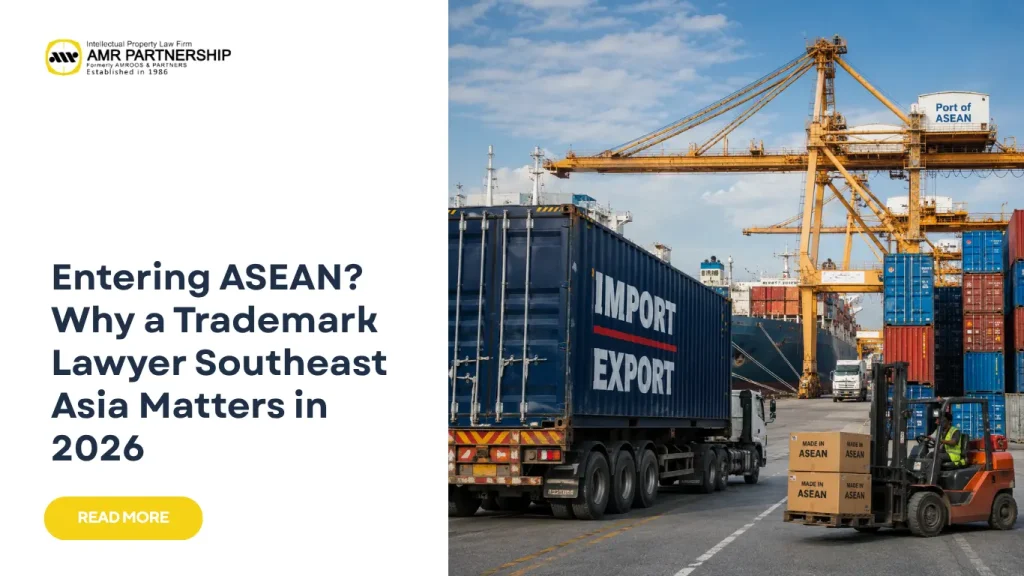
Southeast Asia offers access to more than 690 million consumers and a combined economy worth over US$3.8 trillion, making it an attractive growth market for international brands. But trademark protection across ASEAN is not a single-market process—each jurisdiction has different legal rules, timelines, and enforcement realities, making strategic legal support essential.
Expanding into Southeast Asia sounds straightforward—until your brand name is already registered in one of your target markets.
That’s the reality many businesses discover too late.
ASEAN is one of the world’s most attractive growth regions, with over 690 million people and a combined GDP exceeding US$3.8 trillion, according to ASEAN official data. For businesses planning regional expansion, that’s a massive commercial opportunity. But it also means entering markets where trademark protection can quickly become complex.
In 2026, this matters even more. The World Intellectual Property Organization (WIPO) recently brought together ASEAN intellectual property leaders to discuss the future of IP offices in the region, highlighting a stronger regional push toward modernization, data-driven systems, and long-term IP strategy
That’s good news—but it does not mean trademark protection is unified across Southeast Asia.
Southeast Asia Is One Market Opportunity, But Not One Trademark System
This is where many businesses get it wrong.
A common assumption is that expanding across ASEAN means using one trademark strategy for all countries. In reality, trademark registration in Singapore, Indonesia, Thailand, Vietnam, the Philippines, and other ASEAN markets can involve different:
- filing procedures
- examination standards
- opposition timelines
- documentation requirements
- enforcement mechanisms
In short, your commercial expansion may be regional, but trademark law remains jurisdiction-specific.
For business owners, that creates a real risk. Imagine launching in multiple ASEAN countries, investing in packaging, marketing, distributors, or e-commerce channels—only to face objections, infringement claims, or forced rebranding in a target market.
That’s not just a legal issue. That’s a commercial loss.
Why Businesses Need a Trademark Lawyer in Southeast Asia
A trademark lawyer Southeast Asia is not simply there to “file paperwork.”
The real value is helping businesses reduce risk before expansion becomes expensive.
For example:
Before market entry
A legal review can identify whether your intended brand faces conflicts in target jurisdictions.
When expanding through distributors or franchise models
Trademark ownership and licensing must be structured correctly to avoid future disputes.
When using the Madrid Protocol
International filing can be efficient, but it is not always the best route for every business depending on jurisdiction, timing, and commercial goals.
When facing infringement or opposition
Enforcement strategies differ significantly between countries.
The earlier legal strategy is involved, the lower the chance of costly surprises later.
2026 Reality, Brand Expansion Moves Faster Than Legal Protection
Cross-border business today moves fast.
A product can be listed on regional marketplaces, marketed through digital ads, or distributed through third parties within weeks. Trademark protection does not always move at the same speed.
WIPO’s latest IP indicators show millions of trademark applications filed globally each year, reflecting increasingly competitive brand environments. More businesses entering Southeast Asia means greater competition for names, logos, and brand identity.
Waiting until after launch is often the most expensive mistake.
What International Businesses Should Look For
If your goal is regional expansion, legal support should go beyond domestic trademark filing.
A practical trademark strategy should consider:
- cross-border filing coordination
- jurisdiction-specific risk assessment
- trademark clearance searches
- opposition handling
- licensing and ownership structuring
- enforcement planning
- long-term portfolio protection
For non-legal teams, this can feel overwhelming—which is exactly why strategic guidance matters.
The right legal partner should make complexity understandable, align trademark decisions with business expansion plans, and help protect commercial value—not just legal rights.
Protect Growth Before Problems Start
Entering Southeast Asia can be a strong growth move. But brand expansion without trademark strategy creates avoidable risk.
If your business is preparing to enter ASEAN markets, securing legal guidance early can help protect your brand, reduce commercial uncertainty, and support smoother expansion.
AMR supports businesses with trademark and intellectual property legal services designed to help brands protect what they are building—before issues become costly.
- Phone (Hunting): +62-21-29036668
- Fax: +62-21-29036672 to 75
- WhatsApp Customer Service: Click here to chat
- Instagram: @amrpartnership
- TikTok: @amr.partnership
- Facebook: Law Firm AMR Partnership
- Official Website: www.amr.co.id