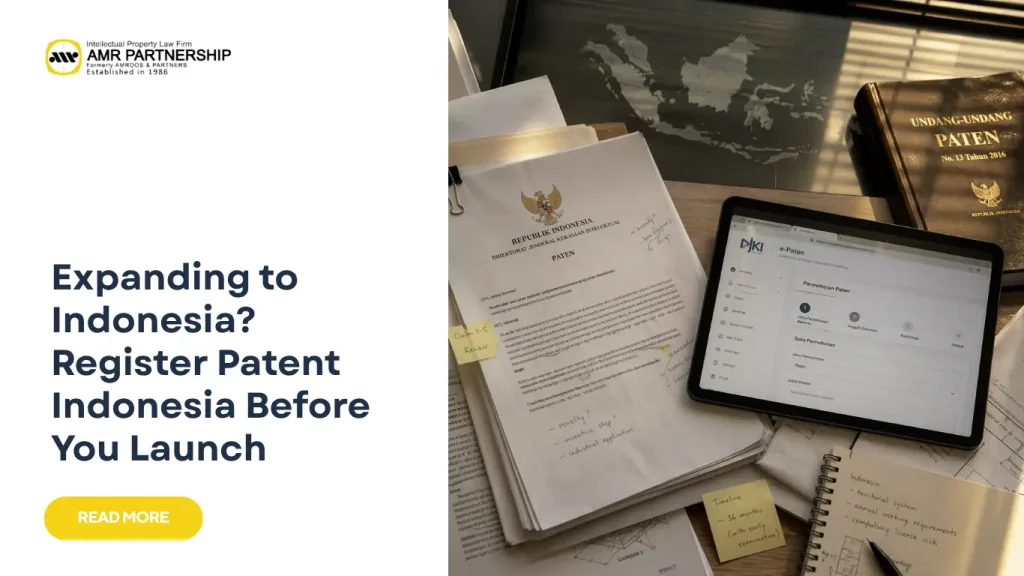
Expanding into Indonesia is a smart move—but doing it without patent protection? That’s a risk many companies only realize when it’s already too late. For businesses from Singapore, Malaysia, and across Southeast Asia, understanding how to register patent Indonesia is no longer just a legal step—it’s part of your market entry strategy.
Let’s break it down.
Why You Can’t Ignore Indonesia
Indonesia is one of the largest and fastest-growing markets in ASEAN. But here’s what many companies overlook:
👉 Patent rights are territorial.
Even if your invention is already protected in Singapore or other jurisdictions, it won’t be protected in Indonesia unless you register it locally.
That means:
- Competitors can legally replicate your innovation
- You lose exclusivity in a high-growth market
- Your expansion strategy becomes exposed
What Changed in 2026 (And Why It Matters)
If you’re relying on older information, you’re likely missing critical updates.
Indonesia’s patent system has evolved in 2026:
- Filing is now fully electronic
- Early examination is available for faster processing
- Documentation must be complete and well-structured from the start
💡 In simple terms:
The system is more efficient—but also less forgiving. Errors early on can cost you time and protection.
What You Need to Register a Patent
To qualify for patent protection in Indonesia, your invention must be:
- New (not disclosed anywhere globally)
- Inventive (not obvious to experts in the field)
- Industrially applicable
Basic filing requirements include:
- Detailed description of the invention
- Clearly defined patent claims
- Supporting drawings (if applicable)
- Applicant and inventor information
⚠️ For foreign companies:
You must appoint a local IP consultant to handle the filing and representation.
How the Process Works (Simplified)
Here’s the typical flow under the updated system:
- Submit application (online)
- Formality check
- Publication period
- Substantive examination
- Patent grant
With early examination options, timelines can be optimized—but only if everything is prepared correctly from the start.
The Part Most Companies Miss
This is where real risk begins.
Annual Patent Working Obligation
In Indonesia, registering a patent is not enough—you must also demonstrate its use.
Each year, patent holders are required to submit a working statement explaining:
- Whether the patent is being used in Indonesia
- How it is commercially implemented
If You Don’t Comply:
- Your patent may be subject to compulsory licensing
- Your legal protection can weaken
- Third parties may challenge your rights
💡 This is where many foreign companies fail—not during registration, but in ongoing compliance.
Why Companies Choose AMR
On paper, registering a patent in Indonesia may seem straightforward.
In practice, it involves:
- Keeping up with evolving regulations
- Structuring claims correctly from day one
- Managing deadlines and compliance requirements
- Avoiding costly procedural mistakes
Working with AMR means you can:
- File in line with the latest 2026 regulations
- Maintain compliance year after year
- Reduce legal exposure and business risk
Your Next Move Starts Here
If Indonesia is part of your Southeast Asia expansion, securing your patent isn’t something to delay—it’s something to plan early.
The real question isn’t just whether you should register patent Indonesia, but how well you execute it from the start.
Because in a fast-moving market like Indonesia, companies that take the time to properly register patent Indonesia—with the right strategy and compliance in place—are the ones that stay protected, competitive, and ahead.
For more information about AMR Partnership, feel free to contact us:
- Phone (Hunting): +62-21-29036668
- Fax: +62-21-29036672 to 75
- WhatsApp Customer Service: Click here to chat
- Instagram: @amrpartnership
- TikTok: @amr.partnership
- Facebook: Law Firm AMR Partnership
- Official Website: www.amr.co.id