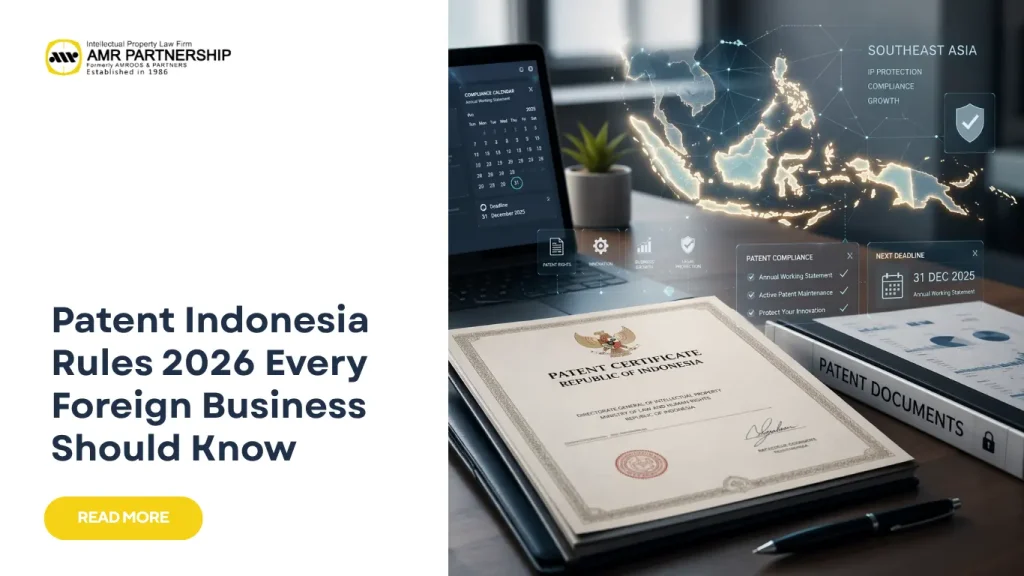
Indonesia is no longer just a “nice-to-have” market in Southeast Asia—it’s becoming a strategic destination for companies expanding their intellectual property (IP) footprint. But here’s what many businesses from Singapore and across ASEAN still miss: Owning a patent in Indonesia today isn’t just about filing. It’s about staying compliant every year.
And since the regulatory updates introduced after 2024, the rules have quietly become stricter.
What “Patent Indonesia” Means in Practice
Patents in Indonesia are administered by the Directorate General of Intellectual Property (DGIP), giving you exclusive rights to use and commercialize your invention locally.
At a glance, the process still looks familiar:
- File your application
- Go through examination
- Get your patent granted
But that’s only the beginning.
The Big Shift in 2026 You Can’t Ignore
Indonesia now requires all patent holders to submit an Annual Patent Working Statement.
In simple terms:
👉 You must report how your patent is being used—every year.
This applies to:
- Foreign companies
- ASEAN-based businesses
- Both new and existing patents
Even if your patent isn’t actively used, you still need to declare its status.
Timeline Changes Most Companies Overlook
The compliance timeline has also evolved:
- Initial rollout deadline (2025): December 31
- Starting 2026: submissions may follow your annuity or filing anniversary
This is where things get tricky.
Many companies assume this is a one-off requirement. It’s not.
It’s now part of your ongoing IP management strategy.
Why This Matters for Singapore and SEA Businesses
If your business is based in Singapore or anywhere in Southeast Asia, Indonesia likely sits high on your expansion list.
But here’s the reality:
👉 Filing a patent ≠ fully protected
👉 No local presence ≠ no obligation
Without proper compliance:
- Your patent can be challenged
- Your enforcement power may weaken
- You may even face compulsory licensing risks
In other words, your patent might still exist—but lose its commercial value.
Staying Compliant Without Slowing Your Business
To manage your patent effectively in Indonesia, you need to:
- Track annual reporting deadlines
- Prepare accurate working statements
- Align patent usage with your business activities
- Ensure compliance with local regulatory expectations
For companies managing multiple markets across ASEAN, this quickly becomes complex.
Where Local Expertise Makes the Difference
Working with a local IP firm like AMR Partnership helps bridge that gap.
Instead of reacting to compliance issues, you can:
- Stay ahead of deadlines
- Reduce legal exposure
- Maintain strong, enforceable patent rights
- Support long-term market expansion in Indonesia
Protecting Your Patent Means Staying Compliant
Indonesia remains one of the most promising markets in Southeast Asia—but its patent system is no longer passive.
In 2026, compliance is part of protection.
For foreign businesses, especially those expanding from Singapore and across ASEAN, understanding this shift early isn’t just helpful—it’s essential to protecting your investment.
For more information about AMR Partnership, feel free to contact us:
- Phone (Hunting): +62-21-29036668
- Fax: +62-21-29036672 to 75
- WhatsApp Customer Service: Click here to chat
- Instagram: @amrpartnership
- TikTok: @amr.partnership
- Facebook: Law Firm AMR Partnership
- Official Website: www.amr.co.id