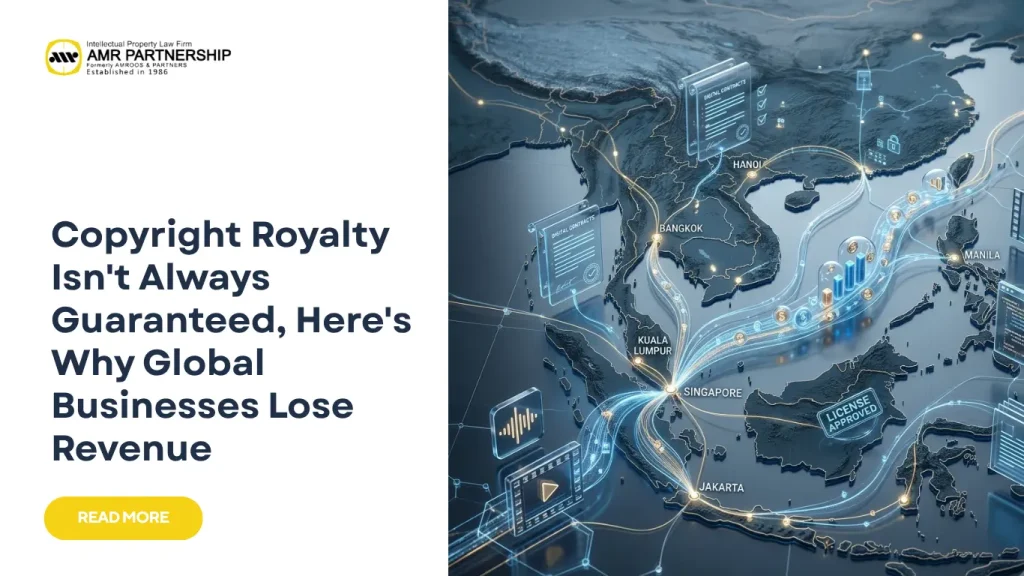
Owning a copyright does not automatically guarantee royalty income. When creative works are licensed or distributed across multiple countries, differences in licensing systems, royalty collection, and copyright governance can delay or reduce payments. Understanding these challenges is essential for businesses seeking to maximize the commercial value of their intellectual property.
Why Copyright Doesn’t Always Mean You’ll Receive Royalties
Many copyright owners assume that registering a work is enough to secure royalty payments. In reality, royalties are generated only when a copyrighted work is commercially used under a valid license or another legal arrangement.
For businesses operating internationally, the process becomes even more complex. Different countries apply different licensing practices, collective management systems, and royalty distribution mechanisms. As a result, creators and businesses may receive lower, delayed, or even missing royalty payments despite widespread use of their works.
How Copyright Royalties Are Generated
A copyright royalty is compensation paid to a copyright owner when another party legally uses a protected work. This may include books, software, music, films, photographs, architectural designs, databases, and other copyrightable materials.
Royalties are commonly generated through:
- Licensing agreements
- Digital streaming platforms
- Publishing and reproduction rights
- Broadcasting and public performance
- Software licensing
- Commercial distribution agreements
The amount of royalty depends on contractual terms, applicable copyright laws, and the licensing model used.
Why Cross-Border Royalty Collection Remains a Challenge
As digital content moves instantly across borders, royalty collection has become increasingly difficult. Businesses often face fragmented licensing systems, inconsistent copyright data, and different royalty calculation methods in each jurisdiction.
Recognizing these challenges, Indonesia introduced the Jakarta Protocol, an international initiative aimed at improving copyright royalty governance in the digital environment. The proposal seeks to strengthen four key areas:
- Royalty collection governance
- Distribution transparency
- Centralized copyright data management
- Fairer royalty valuation across countries
The initiative has received support from Malaysia, Brunei Darussalam, and the Director General of the World Intellectual Property Organization (WIPO). Indonesia also submitted its proposal to WIPO’s Standing Committee on Copyright and Related Rights (SCCR) for international discussion.
The proposal reflects a growing international recognition that copyright protection alone is no longer enough. Transparent royalty governance is becoming equally important for businesses that monetize intellectual property globally.
How Businesses Can Better Protect Their Royalty Rights
For companies expanding across Southeast Asia and other international markets, protecting copyright should go beyond registration.
Businesses should maintain clear ownership records, prepare comprehensive licensing agreements, regularly monitor the commercial use of their works, and ensure their copyright information remains accurate across licensing and distribution channels.
Taking these steps can reduce disputes, improve royalty collection, and strengthen the commercial value of intellectual property in cross-border transactions.
Protect Your Copyright Strategy with AMR Partnership
Whether you license creative works, publish digital content, or expand your business into Southeast Asia, a well-planned copyright strategy helps protect long-term revenue opportunities.
AMR Partnership assists businesses with copyright registration, licensing agreements, intellectual property portfolio management, and cross-border copyright strategies. Our team helps clients navigate complex IP regulations so they can commercialize their creative assets with greater confidence across multiple jurisdictions.
Reference
- WIPO — Indonesian Proposal for a Legally Binding Instrument on the Governance of Copyright Royalty in Digital Environment (SCCR/47/6).
- Direktorat Jenderal Kekayaan Intelektual (DGIP) — Indonesia Dorong Protokol Jakarta untuk Keadilan Royalti Musik Global.
- Phone (Hunting): +62-21-29036668
- Fax: +62-21-29036672 to 75
- WhatsApp Customer Service: Click here to chat
- Instagram: @amrpartnership
- TikTok: @amr.partnership
- Facebook: Law Firm AMR Partnership
- Official Website: www.amr.co.id