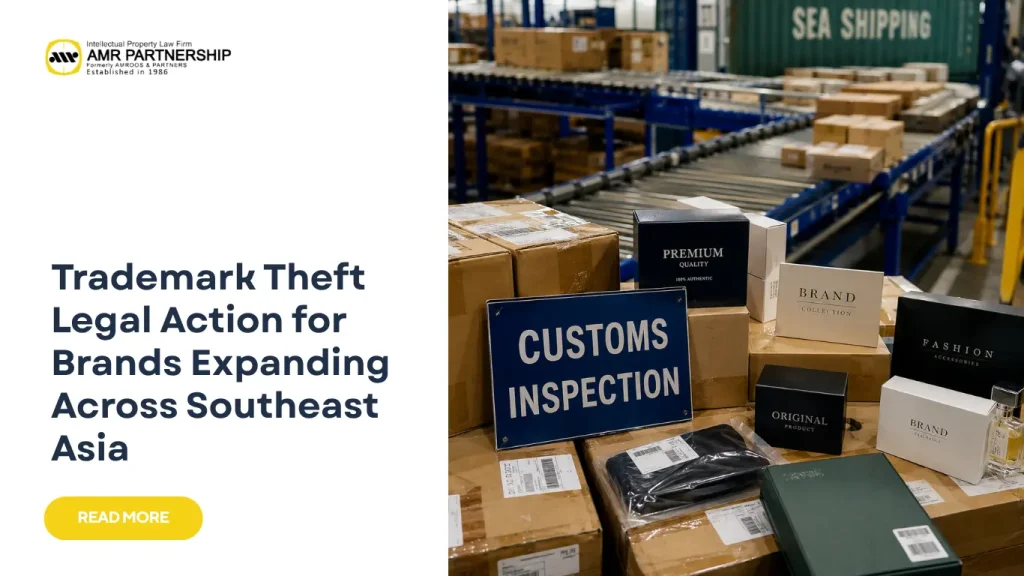
Trademark theft legal action is no longer just about counterfeit goods—it now includes social media impersonation, marketplace abuse, and cross-border brand misuse. For businesses expanding into Southeast Asia, acting early with the right enforcement strategy can reduce financial losses, protect brand trust, and prevent repeat infringement.
A common misconception is that trademark theft only becomes a legal issue when counterfeit products flood the market. In reality, damage often starts much earlier—through fake seller accounts, unauthorized marketplace listings, misleading domain names, or copycat branding that confuses customers.
Legally, “trademark theft” is not always the formal term used in every jurisdiction. Depending on the facts, the issue may fall under trademark infringement, counterfeiting, passing off, or unfair competition. But from a business perspective, the concern is the same: someone is exploiting your brand equity without permission.
And the risk is not small. According to the OECD and EUIPO, global trade in counterfeit and pirated goods was estimated at up to US$467 billion, representing 2.3% of world trade. Counterfeit activity remains particularly active in cross-border commerce, where enforcement becomes more complex. (Source: OECD/EUIPO, Mapping Global Trade in Fakes 2025)
For businesses entering Southeast Asia, that complexity increases because infringement can spread across multiple digital channels and jurisdictions quickly.
What Trademark Theft Looks Like in 2026
Today’s trademark misuse rarely looks like traditional offline infringement alone.
Common scenarios include:
- fake social media seller accounts using brand identifiers
- unauthorized ecommerce listings
- counterfeit imports crossing borders
- misleading reseller branding
- domain names designed to imitate legitimate businesses
- AI-generated branded visuals that create consumer confusion
A recent 2026 appellate trademark enforcement case in Singapore reinforced how seriously courts now view digital infringement, especially where infringers continue operations after warnings and attempt to evade enforcement through alternate online accounts.
That matters for businesses targeting Southeast Asia because digital-first infringement scales fast and cheaply.
Trademark Theft Legal Action: What Can Businesses Actually Do?
Not every case starts with litigation—and in many situations, that is not the smartest first move.
A practical enforcement strategy often follows escalation stages:
Evidence preservation
Before taking action, preserve:
- screenshots
- timestamps
- listing URLs
- seller/store details
- customer complaints
- transaction records
- sample purchases
- domain ownership records
Without evidence, enforcement becomes weaker.
Cease-and-desist action
This is often effective for smaller or first-time infringements, especially where the infringer may cooperate.
Platform takedowns
For marketplace or social commerce infringement, fast takedown mechanisms may stop exposure before financial damage grows.
Customs enforcement
For businesses facing counterfeit import/export risks, customs recordal can become a critical preventive tool.
Civil litigation
When infringement is repeated, commercially harmful, or strategically damaging, court action may be necessary.
Criminal enforcement (where applicable)
Large-scale counterfeiting operations may trigger criminal enforcement depending on jurisdiction.
This multi-step approach aligns with practical enforcement guidance used in international trademark protection frameworks.
Why Waiting Gets Expensive
Trademark infringement is not only a legal problem—it is a revenue and trust problem.
The hidden costs include:
- customer confusion
- damaged reputation
- distributor distrust
- weakened exclusivity
- lost expansion momentum
- higher future enforcement costs
WIPO consistently emphasizes that trademarks are strategic business assets, not merely registration formalities. When unauthorized use goes unchallenged, the commercial value of the mark can erode over time. (Source: WIPO Trademark Resources)
For B2B-focused companies, this becomes an ROI issue. Delayed enforcement often costs more than early intervention.
Why Southeast Asia Needs a Regional Strategy
Trademark enforcement in Southeast Asia is rarely a single-country issue.
A seller may:
- operate from one country
- target buyers in another
- use marketplaces headquartered elsewhere
- ship counterfeit goods regionally
This creates jurisdictional complexity that many businesses underestimate.
A cease-and-desist letter that works in one jurisdiction may not solve a parallel infringement problem elsewhere. Platform enforcement rules also vary significantly.
That is why trademark theft legal action should be approached strategically—not reactively.
When to Involve Trademark Counsel
Businesses should consider legal guidance when:
- infringement crosses borders
- the infringer ignores warnings
- counterfeit goods enter supply chains
- marketplaces fail to act
- business expansion is at stake
- distributor or reseller misuse becomes commercially harmful
For businesses protecting brand assets across Southeast Asia, legal enforcement is not just about stopping infringement—it is about preserving long-term market value.
AMR Partnership supports businesses with trademark enforcement strategy, infringement assessment, dispute resolution, and cross-border intellectual property protection across regional markets.
- Phone (Hunting): +62-21-29036668
- Fax: +62-21-29036672 to 75
- WhatsApp Customer Service: Click here to chat
- Instagram: @amrpartnership
- TikTok: @amr.partnership
- Facebook: Law Firm AMR Partnership
- Official Website: www.amr.co.id